Restaurant Interior Design in Dubai
Restaurant interior design in Dubai is the discipline of shaping a dining space around a commercial idea — one that drives covers, dwell time and repeat visits while meeting the demands of a working kitchen. Studio By Three is a boutique interior design firm based in Al Quoz, Dubai, specialising in restaurant, café and F&B interiors across Dubai and Abu Dhabi, with four delivered F&B projects in the capital: Mamafri Mamsha, Brunch Morsel, Osk Croissanterie and Let's Café.
Why is restaurant design a business decision?
A restaurant's interior directly determines its revenue per square metre. Layout sets the number of covers per service and the speed of table turns. Atmosphere controls dwell time and average spend. A distinctive, photogenic room generates the social sharing that now drives discovery — 78% of Middle East consumers discover brands via social media, according to PwC.
This is how we approach every F&B brief. The dining room is a commercial instrument before it is an aesthetic one. Seating density, table geometry, sightlines to the pass and the path from door to table all carry measurable consequences for a P&L. A concept that cannot fill its seats twice a night is a design failure, however beautiful the photographs.
Dubai rewards operators who get this right. The emirate welcomed 19.59 million international overnight visitors in 2025, up 5% on 2024 and a third consecutive record, according to Dubai's Department of Economy and Tourism. Those visitors are dining out, and they choose where to eat with their phones before they choose with their feet.
What does a concept-first approach mean in practice?
Concept-first means the spatial idea is fixed before any material is selected. We define the story the room must tell — its tempo, its intimacy, its attitude — and let that decision govern layout, light, acoustics and finish. Everything that follows is execution of a single, coherent idea.
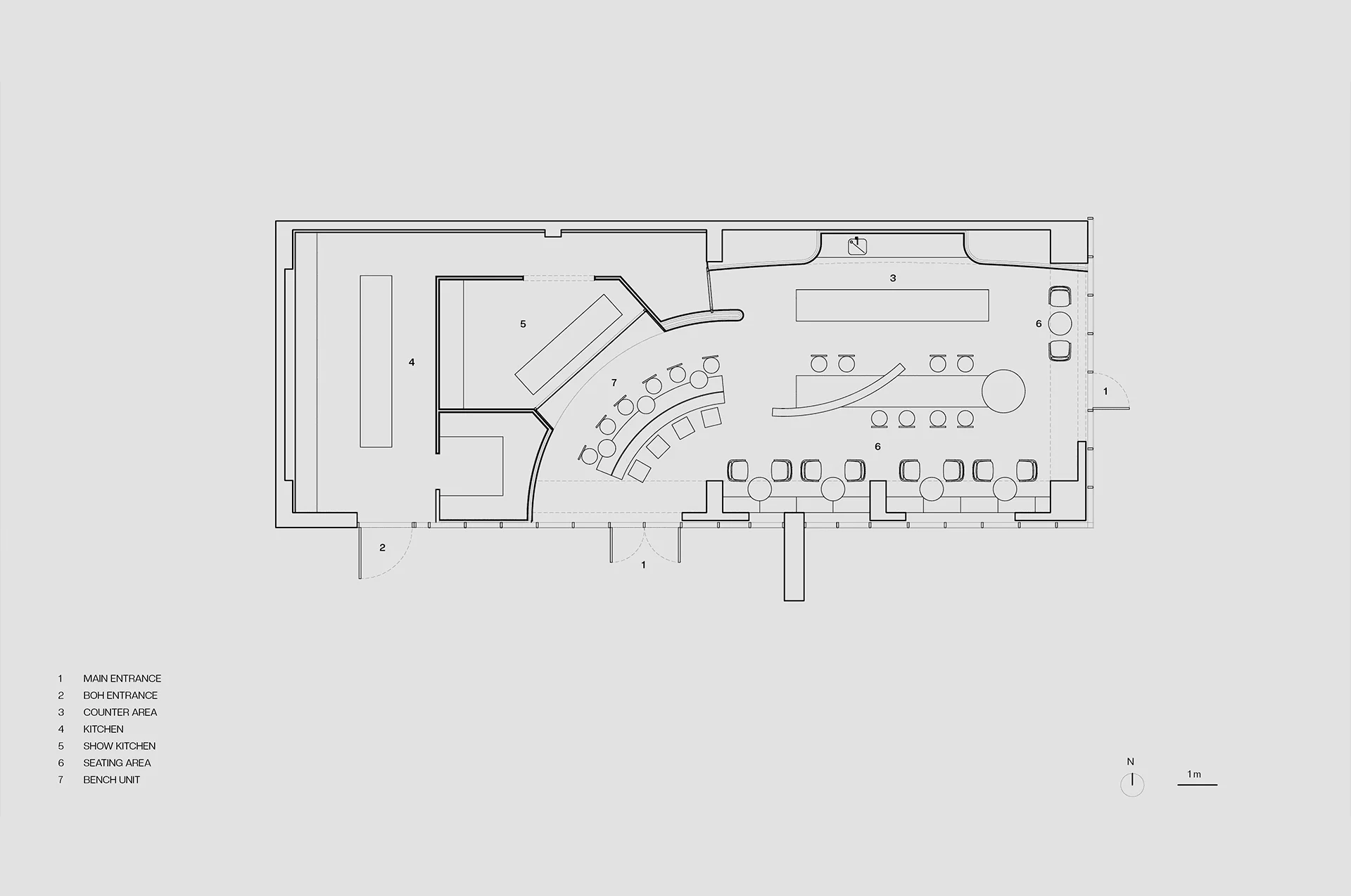
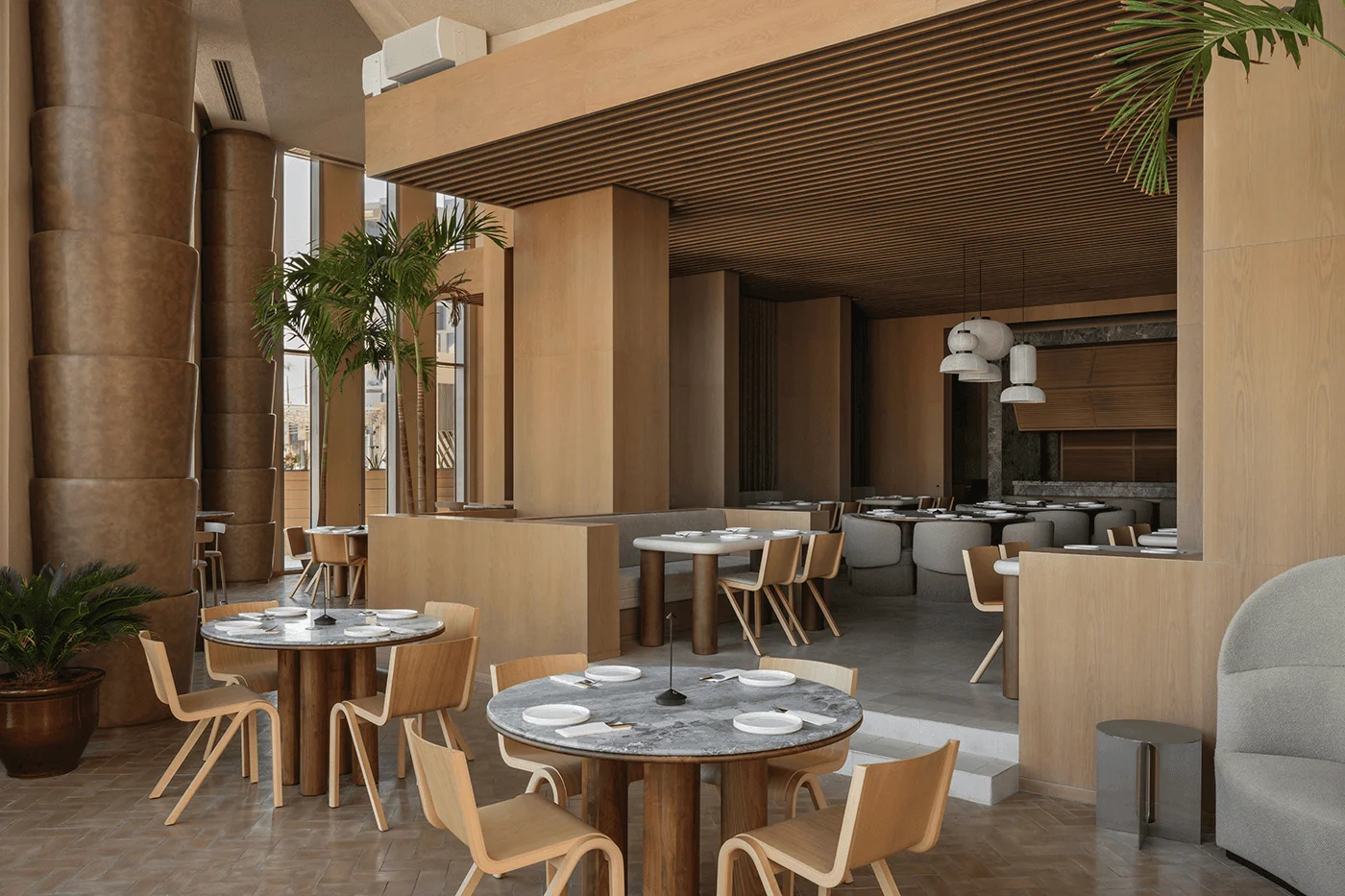
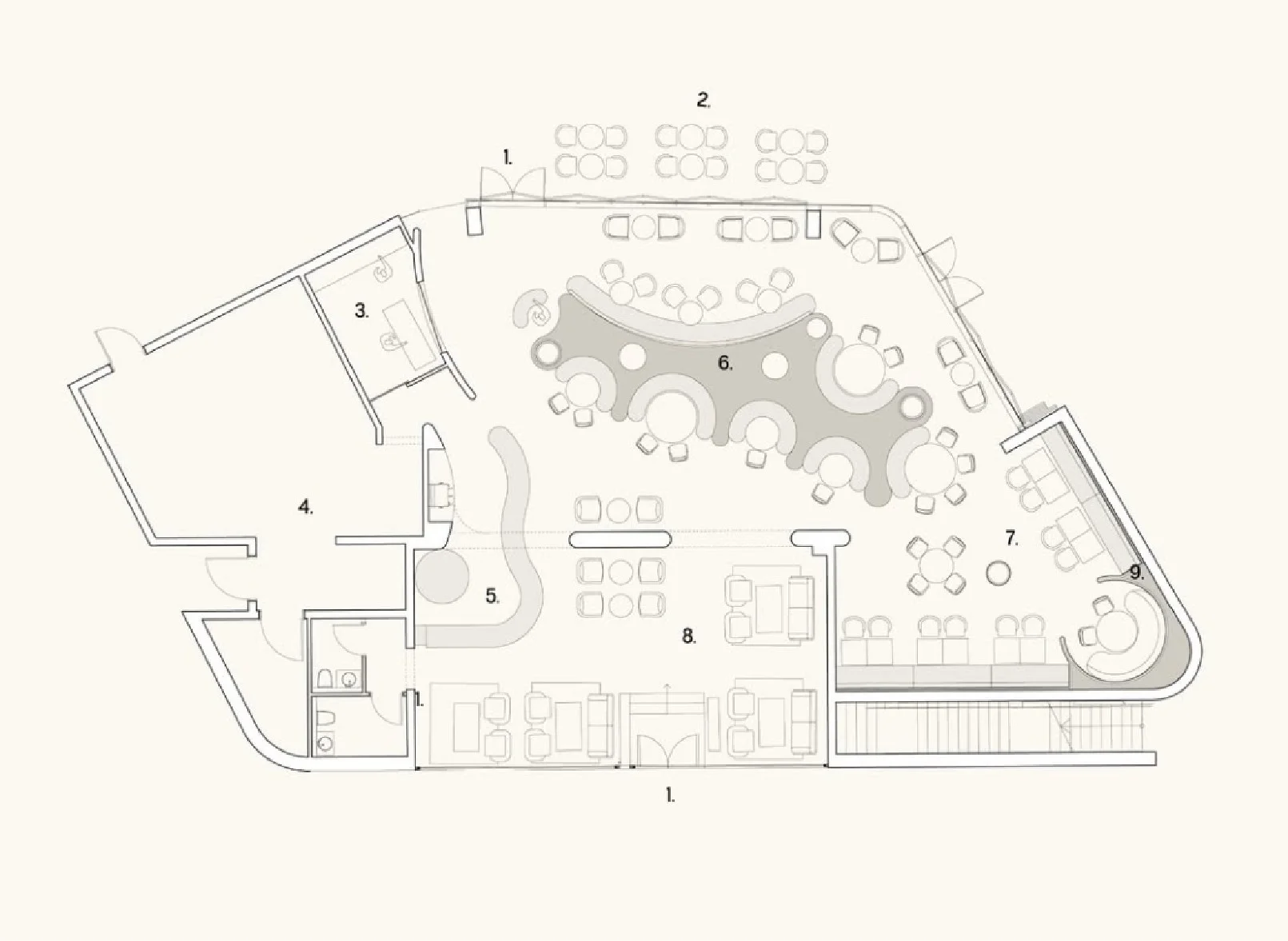
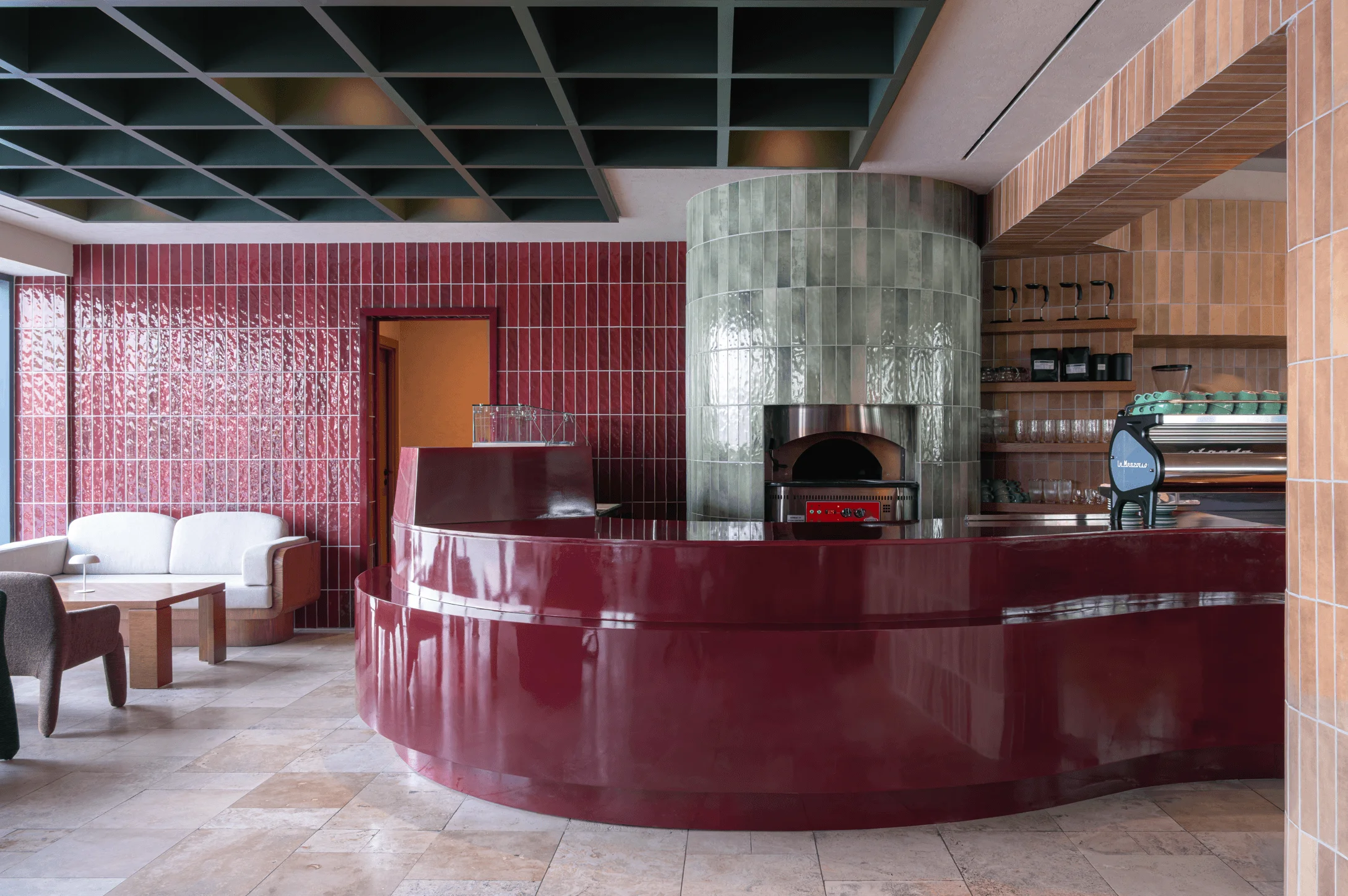
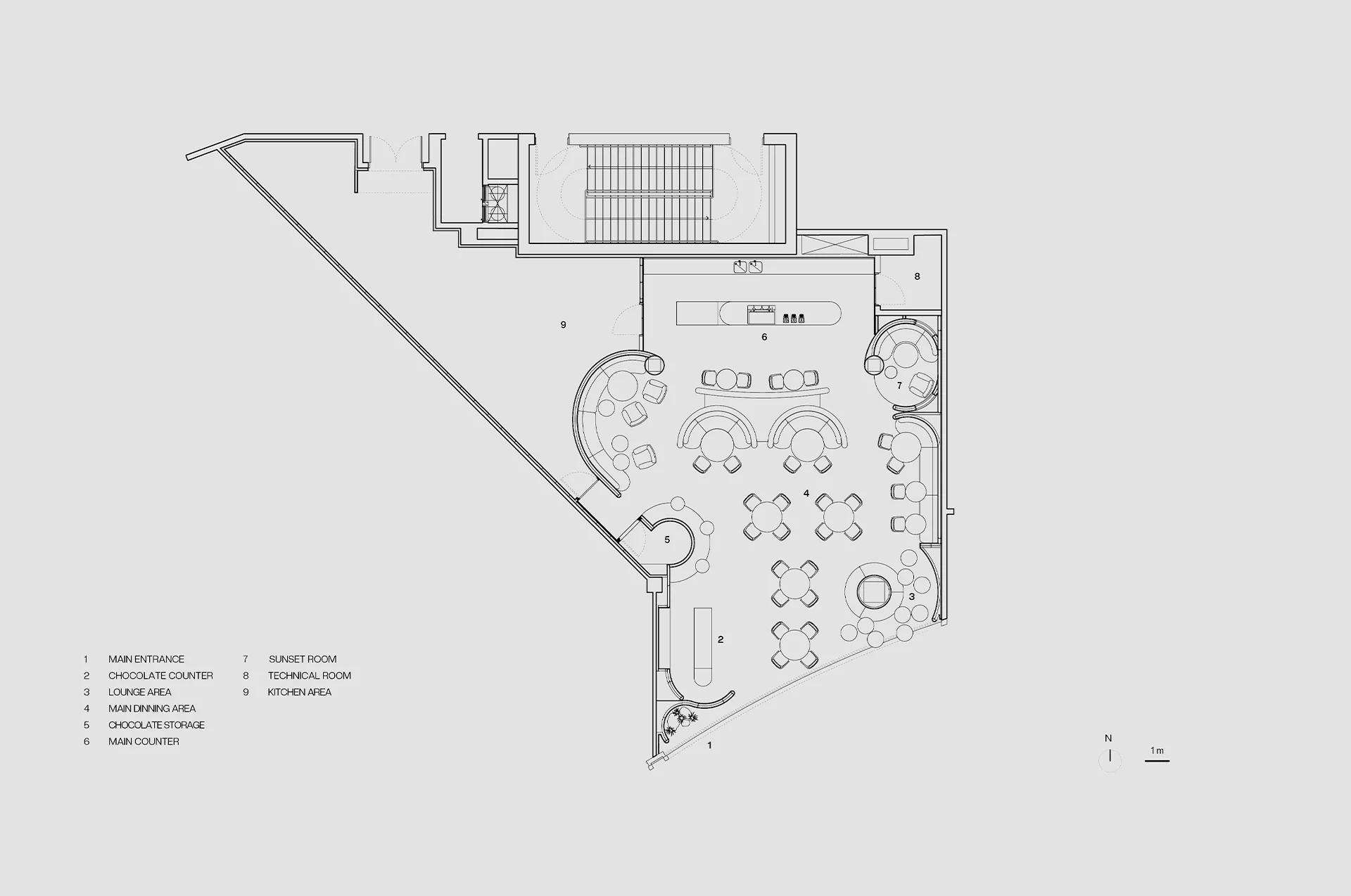
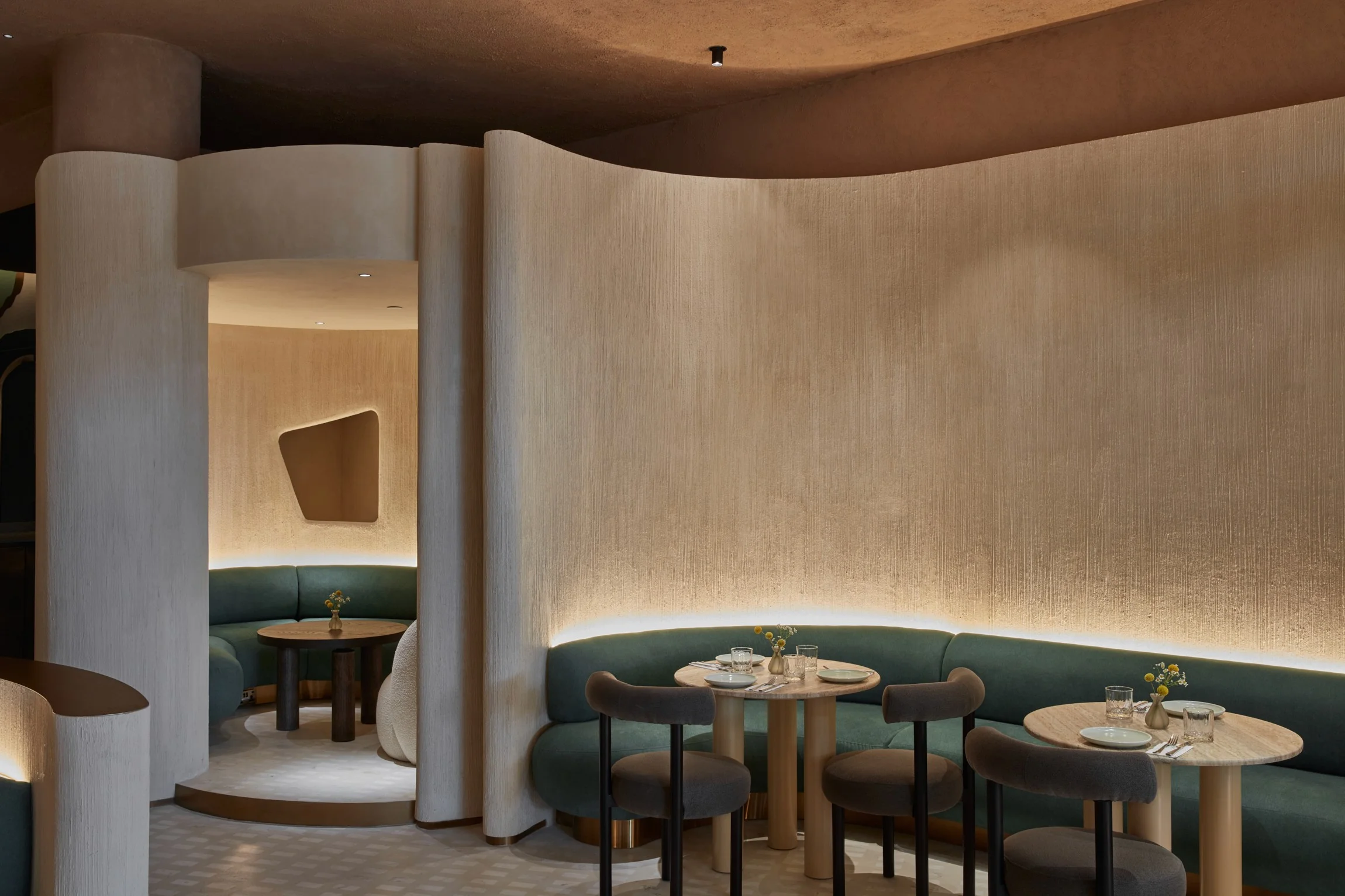
At Mamafri Mamsha in Abu Dhabi (2023), the concept was an Asiatic-inspired pavilion facing the ocean. Tiered wooden floors organise the room towards the view, and a monochromatic palette of wood, stone and fabric holds the idea without noise. At Let's Café (Abu Dhabi, 2026), a sculptural central element anchors the plan, with green and maroon tiles setting the register of a space built for socialising. Brunch Morsel (2022) and Osk Croissanterie (2021) each began the same way: a precise answer to who the guest is, why they come, and what they should feel. We do not design for the ego; the concept always serves the business.
How do you handle the operational realities of a restaurant fit out?
A successful restaurant fit out reconciles front-of-house experience with back-of-house performance. Kitchen flow, extraction, acoustics, lighting levels and material durability are resolved alongside the guest-facing design, not after it. Compliance with Dubai Municipality and Dubai Civil Defence requirements is planned from the first drawing.
Kitchen and service flow decide whether a dining room can deliver its covers. We plan the pass, the service stations and the staff routes so a full room runs without friction. Acoustics determine whether conversation is possible at peak service — a room that looks right but sounds wrong empties early. Lighting is layered: task light where staff work, low warm light where guests linger, and controlled daylight where the façade allows it.
Material selection is a durability calculation. Honed stone, terrazzo and stitched leather age well under commercial cleaning regimes; delicate finishes do not. We specify for the third year of operation, not the opening-night photograph. Regulatory coordination — municipality approvals, civil defence, food-safety requirements for kitchen zones — is built into the programme so it never becomes the reason a launch date slips.
Why does Dubai's F&B maturity matter for new openings?
Dubai is now a globally recognised fine-dining market, which raises the bar for every new restaurant interior. The Michelin Guide Dubai 2025 awarded its first-ever three stars to FZN by Björn Frantzén at Atlantis The Palm and to Trèsind Studio, the world's only three-star Indian restaurant. The guide now covers 119 restaurants across 35 cuisines, with three Michelin Green Stars.
For operators, this changes the brief. Guests benchmark a new opening against internationally decorated rooms, not just the restaurant next door. Interior design is part of how a restaurant signals its ambition — to diners, to critics and to guides. A considered interior will not win a star on its own, but an incoherent one can quietly disqualify a room from serious attention.
Selected F&B projects
Frequently asked questions
How much does restaurant interior design cost in Dubai?
Cost depends on size, condition of the shell, kitchen complexity and material specification. We scope every project individually after an initial consultation, so budgets are grounded in the actual brief rather than a rate card.
How long does a restaurant fit out take in Dubai?
A typical project runs from several months of design and approvals through to a fit-out period that varies with scale and complexity. Dubai Municipality and Dubai Civil Defence approval timelines are built into the programme from the outset.
Do you design cafés as well as restaurants?
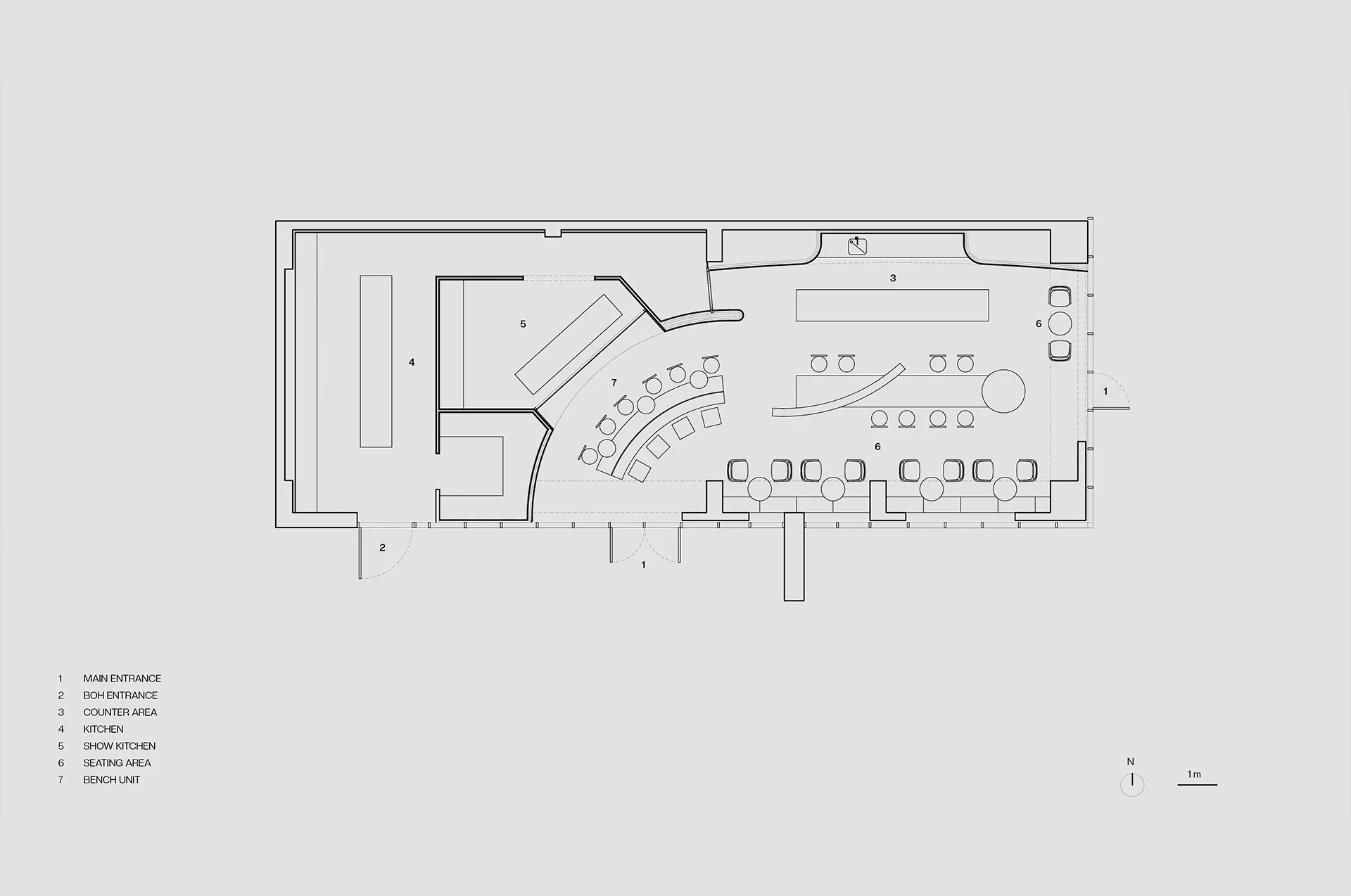
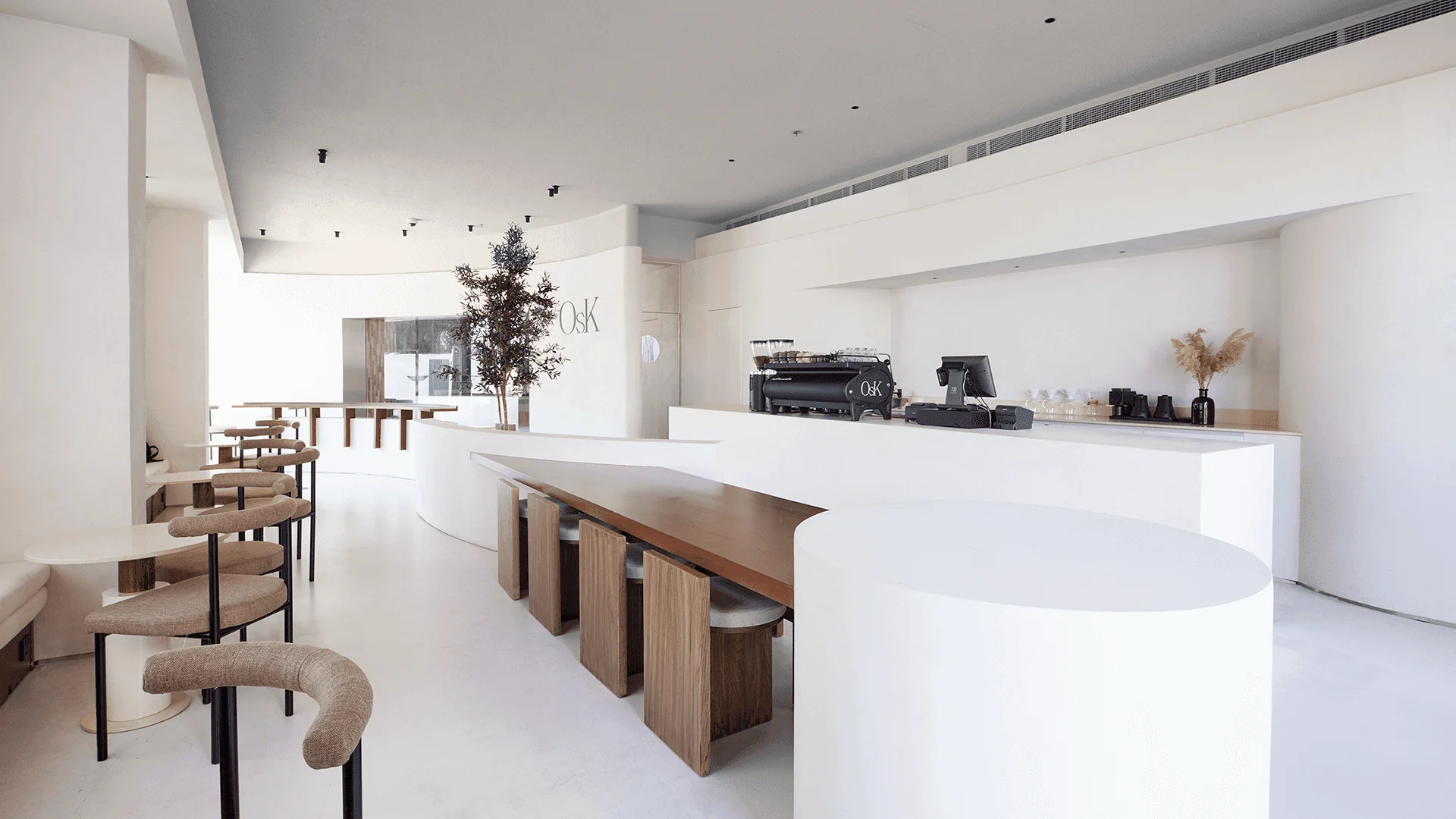
Yes. Café design is a distinct discipline — faster turnover, counter-led service, tighter footprints. Osk Croissanterie (2021) and Let's Café (2026), both in Abu Dhabi, are café projects with very different concepts and commercial models.
Can you work with an existing F&B concept or franchise?
Yes. We interpret established brands for new locations, adapting the identity to the site's architecture and the local market while protecting what makes the concept recognisable.
Do you take on restaurant projects outside Dubai?
Yes. Our delivered F&B portfolio is in Abu Dhabi — Mamafri Mamsha, Brunch Morsel, Osk Croissanterie and Let's Café — and we work across the UAE from our Dubai studio.
What should I prepare before our first meeting?
A site or target location, a draft concept or menu direction, a target covers count and a realistic budget range.
Studio By Three is a boutique interior design firm specialising in hospitality and F&B interiors, led by architects Eugenio Fernandez and Victor Nouman. If you are planning a restaurant or café in Dubai or Abu Dhabi, we would welcome the conversation. Visit us at Warehouse N.7, Al Quoz 3, Dubai, write toinfo@studiobythree.com, or call+971 50 443 6236.